Garden Maintenance in Hackney

Garden Maintenance Hackney provides practical, regular care for outdoor spaces that need to stay tidy, healthy and manageable through the year. Our work covers routine mowing, edging, trimming, weeding and border care, along with seasonal tasks that help gardens keep their shape and condition. For homes with compact yards, shared gardens or larger plots, the aim is straightforward: keep the space usable, presentable and in better order without turning maintenance into a one-off scramble.
The main benefit of planned maintenance is consistency. Rather than waiting until growth becomes difficult to control, we look after the detail in a steady way so beds, paths, lawns and shrubs remain easier to manage. That can include regular visits or occasional tidying depending on what the garden needs. If you are comparing options, the services overview gives a broader picture of the work we can support across domestic gardens.
When a quotation is being prepared, it helps to think about the size of the garden, how quickly it changes through the season and whether there are areas that need extra attention such as hedges, lawns or overgrown corners. A clear description of the work needed usually makes it easier to match the service to the site. Simple jobs, mixed maintenance and heavier tidy-ups can all be approached in different ways, so it is worth setting out the priorities clearly. Request a quotation when you are ready to compare the options available for your garden.
Routine garden care and seasonal upkeep
Routine maintenance is often the best way to prevent a garden from slipping into a state that takes longer to restore. Grass that is cut at sensible intervals grows more evenly, borders stay visible, and paths are less likely to be narrowed by stray growth. We can support ongoing garden care with attention to detail rather than rushed clearing, which is useful when the aim is to preserve planting as well as improve appearance. For some customers, the work is mainly about tidiness; for others, it is about keeping the garden functioning as an everyday space.
Seasonal upkeep usually changes with the weather and growth patterns. Spring and summer may call for more frequent cutting, trimming and weeding, while autumn often brings leaf collection, cutting back and preparation for the quieter months. Our approach is to match the work to the condition of the garden rather than forcing every visit into the same pattern. If you would like to discuss the kind of upkeep your space needs, pricing and quotes is a sensible place to review how an enquiry can be shaped.
What regular maintenance can include
Useful maintenance work can involve more than a single cut or sweep. It may include deadheading, light pruning, border tidying, path clearing, weed control, clipping back accessible growth and checking that the garden still has a neat outline. Where needed, we can focus on one part of the outdoor space, such as the front garden or a communal section, without treating the whole property as a generic task. The work stays practical and specific to the layout, plant growth and level of upkeep required.
Lawn mowing and edge finishing

A well-kept lawn can shape the look of the whole garden, so mowing is often one of the most visible parts of regular maintenance. We provide lawn mowing as part of garden care in Hackney, with attention to the cut height, finish and surrounding edges. Where lawns are bordered by flower beds, paving or fences, the result usually depends on the details as much as the grass itself. An even cut and clean edge can make an outdoor space feel more ordered without unnecessary disruption to planting.
Good mowing practice also depends on the state of the grass. Very long grass, uneven surfaces, damp patches and mixed growth can all affect the work that needs to be done. In some gardens the lawn may need a straightforward tidy-up; in others it may benefit from more considered reduction over time. We can also maintain the transition between lawn and border so that the edges do not blur into a single overgrown strip. For wider landscaping needs, the landscaping page sets out related options.
Where lawns form part of a bigger maintenance schedule, it often makes sense to combine mowing with edging and light clearing in the same visit. That avoids leaving clipped grass on paths or around beds and keeps the finished result cleaner. Regular lawn care is also easier to plan when access is straightforward and the likely scope is explained clearly in advance. For most gardens, a short list of the areas to be cut and any awkward sections to avoid is enough to guide the work properly:
- Main lawn or front strip
- Edges beside paving and borders
- Areas affected by heavy growth
- Light clearing after cutting
Hedge trimming and controlled shaping
Hedges need cutting back with care if they are to stay neat without being stripped bare. Our hedge trimming work is suited to garden boundaries, privacy screens and smaller decorative hedges that benefit from a controlled shape. A good trim supports healthy growth while keeping the hedge within its intended space. In practical terms, that can mean tidying sides, reducing height where appropriate and bringing the outline back into line with fences, walls or neighbouring planting.
Different hedges call for different handling. Some respond well to regular light cutting, while others are better managed with less frequent but more considered shaping. We do not treat every hedge in the same way, because size, density and species all influence the result. If a hedge has begun to spread across a path, block light or look uneven after a period without care, the work may need a careful first pass before routine maintenance is easier again. Where tree work is relevant, the tree lopping and removal page covers a related but separate service area.
Hedge trimming also helps define the rest of the garden. A clear line at the boundary can make beds, lawns and seating areas feel more deliberate, and a maintained hedge can reduce the sense that the space is closing in. For customer decisions, it is helpful to think about whether the hedge needs a light tidy, a reduction in size or a more careful reshaping. Those distinctions affect the amount of time involved and the type of finish needed, so a concise description at enquiry stage usually leads to a better match between need and service.
Garden clearance for overgrown or untidy spaces
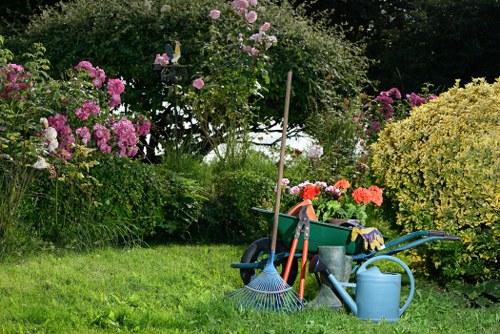
Some gardens move beyond routine care and need a more thorough clear-out before maintenance can begin again. Our garden clearance work is aimed at spaces with excessive growth, accumulated debris or areas that have become difficult to use. That may include brambles, self-seeded growth, fallen material, dead plant matter or general garden waste that has built up over time. The purpose is to restore access, reveal the structure of the garden and create a workable base for later upkeep.
Clearance is often a more physical stage of outdoor work than regular maintenance, but it still benefits from a tidy and organised approach. Rather than treating everything as waste to be removed immediately, we can separate what is being kept from what is being cut back or lifted. This is particularly important where there are existing shrubs, climbers or planted areas that should be preserved. If the space also needs a more detailed plan afterwards, the garden clearance page is a useful place to review the service in more depth.
Before any larger clear-out, it helps to identify what needs to stay, what is blocking access and whether there are corners that may contain hidden rubbish, roots or broken fixtures. That information allows the work to be organised more safely and avoids removing material that should remain in place. For many customers, a clearance job becomes the turning point between a garden that feels unusable and one that can be maintained in a straightforward way again.
Planting areas, borders and light landscape work
Beyond mowing and trimming, many gardens need attention to the planted parts of the space. We can support border maintenance, general tidying around shrubs and practical landscape gardening tasks that help the overall layout stay coherent. That may include refreshing the visible edge of beds, removing clutter from planting areas or managing growth so one section does not overwhelm another. The goal is not to redesign every garden, but to keep the structure clear and the planting easier to maintain.
Landscape gardening can be helpful when the existing layout is no longer working as intended. Overgrown beds, weak access routes and uneven planting can make even a small garden feel awkward to manage. A thoughtful approach may involve reducing competing growth, opening up circulation, or making the planted areas simpler to look after. For customers wanting related design-and-maintenance support, the landscape gardening page describes that service area further. It sits alongside our practical maintenance work rather than replacing it.
Useful decisions in this part of the service often come down to what should be preserved and what can be simplified. Some gardens benefit from keeping established shrubs in place and removing only the most troublesome growth. Others need a more comprehensive tidy so that borders, paths and lawn edges make visual sense again. We can work with those different aims without overcomplicating the job. A good maintenance plan is usually one that respects the existing garden while making it easier to look after in the future.
What to expect when arranging the work

When arranging garden maintenance, the most useful information is often the simplest. A short description of the areas involved, the kind of growth that needs attention and any access points that matter is normally enough to start shaping a quotation. Photos can also be helpful when the garden is not easy to describe, especially if there are overgrown sections, narrow side access or separate parts of the property to consider. Clear information does not need to be long, but it should be specific enough to show what needs doing.
It also helps to mention any features that should be handled carefully, such as young plants, water features, uneven ground or surfaces that are awkward underfoot. If there is a preferred order for the work, or if one area matters more than another, that can be noted as well. This is not about creating more administration; it is about making sure the maintenance matches the garden rather than forcing the garden to fit a generic template. For full terms around handling and payment, you can also review our terms and conditions.
Some customers prefer a one-off tidy before resuming regular upkeep, while others are looking for repeated attention across the growing season. Both approaches can be practical, depending on how the space behaves and how much time is needed to keep it under control. When the scope is clear at the start, it becomes easier to decide whether routine mowing, edging, pruning or clearance is the right starting point. If you are ready to proceed, ask for a quotation and set out the main areas you want covered.
Keeping the finish tidy and manageable
One of the main reasons people choose garden maintenance is to avoid the cycle of letting everything build up and then spending far longer bringing it back down. A tidy finish matters because it affects how the garden functions as a whole. Paths stay easier to use, borders are clearer to navigate and the space is less likely to feel cluttered. Good maintenance is often less about dramatic change and more about preserving order in a way that makes everyday use simpler.
That said, a garden only stays manageable if the work is done with a sense of proportion. Cutting too hard, trimming too often or clearing away growth that should be retained can make later care harder rather than easier. We aim to support a measured result that suits the existing layout and the customer’s priorities. Where there are wider concerns about safety, access or site care, the health and safety policy provides a relevant policy reference for this website. It does not replace the practical assessment of the garden itself.
Maintenance is also about continuity. A garden that is checked regularly tends to need less forceful intervention later on, because the work is spread across smaller tasks rather than delayed until the space is heavily overgrown. For some properties that means lawn care; for others it means hedge lines, boundary edges or planted corners. The exact mix changes, but the principle stays the same: keep the space under control before problems become larger than they need to be.
About Hackney
Hackney is a London borough in the north-east of the city, shaped by a long mix of residential streets, former industrial sites, transport corridors and open public spaces. The area includes neighbourhoods such as Hackney Central, Hackney Wick, Dalston, Stoke Newington and Homerton, each with a different character even though they sit within the same borough. Over time, the district has been influenced by metropolitan expansion, changing housing forms and the reuse of older buildings and land. That layered history can still be seen in the contrast between Georgian and Victorian terraces, post-war estates, canal-side development and newer mixed-use schemes. Green space also plays an important role in the borough’s identity, with sites such as London Fields, Victoria Park, Clissold Park and the stretch of the Regent’s Canal shaping how people move through and experience the area. The waterways and railway lines give Hackney a distinctive urban structure, with routes that connect busy high streets to quieter residential pockets. Cultural life has also been a notable feature of the borough, supported by markets, independent venues, studios, cafes and community organisations. The result is a place that feels varied rather than uniform, with local character often changing within a short walk. Its built environment reflects both continuity and change, making it one of London’s more recognisable inner boroughs.
Service planning, access and the right scope
Not every garden needs the same level of attention, so it makes sense to choose a scope that fits the site rather than trying to cover everything at once. A front garden may need only mowing and edging, while a rear garden might also need pruning, clearance and border tidying. Shared spaces can need a more careful balance between keeping the area presentable and avoiding disruption to neighbours. The right maintenance plan is usually the one that makes the garden easier to use without adding unnecessary work.
Access can also influence how maintenance is organised. Narrow side passages, gated entries, awkward steps or limited storage space for cut material may affect the sequence of the job. That does not prevent the work from being done, but it does mean a quotation should reflect the actual conditions rather than an idealised version of the site. If your garden has mixed surfaces, delicate planting or sections that are hard to reach, those details help us plan sensibly. For more about responsible handling and garden materials, see recycling and sustainability.
Practical preparation for an enquiry does not need to be complicated. It is enough to say what the main problem is, what should be included and whether the work is one-off or ongoing. If you already know which parts of the garden matter most, include that first. If you are not sure, describe the general condition and the result you want. Request a quotation when you are ready to talk through the most suitable level of maintenance for your space.
Choosing maintenance that suits the garden
Different gardens respond best to different levels of care, which is why the work is rarely just about cutting back what looks untidy. Some outdoor spaces are best served by steady, repeated maintenance that prevents growth from getting ahead. Others need a more substantial tidy before they can be kept in shape regularly. The distinction matters because a sensible starting point can save time later and create a finish that is easier to preserve. Our service is built around that sort of practical decision-making.
Where a customer is comparing services, it can help to look at the relationship between routine maintenance, trimming, mowing and clearance. These are related tasks, but they are not identical. A garden with healthy planting and a neat structure may only need ongoing upkeep. A more neglected space may need a heavier intervention first. By matching the work to the condition of the garden, the result is generally more coherent and less wasteful. If you want to contact us about the work, contact us to begin the quotation process.
In the end, the aim is to keep the garden working well as part of the property rather than treating it as an afterthought. That means focusing on the right tasks in the right order and avoiding unnecessary complexity. Whether the need is for mowing, hedge trimming, weeding, border care or a fuller clear-out, our maintenance service is organised around useful outcomes. Tell us what needs attention, and we can help shape the next step.